不要凭感觉加索引! 每次优化慢 SQL 前,先跑 EXPLAIN (ANALYZE, BUFFERS) 看清两件事:① 有没有发生大表全扫(Seq Scan);② 实际读了多少内存页(shared hit / read)。
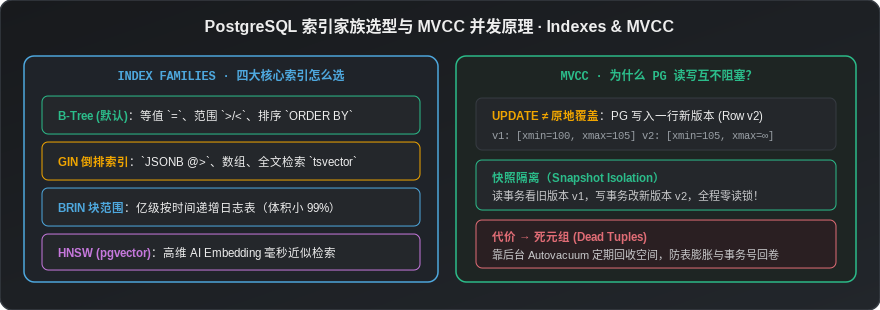
1. 组合索引与部分索引:把查询从 1.2 秒降到 0.4 毫秒 / Composite & Partial Indexes
建索引最常见的三个误区,避开就能秒杀 90% 的慢 SQL:
- 联合索引列顺序口诀:“等值放前面,范围/排序放后面”。查
WHERE tenant_id = 5 AND created_at > '2026-11-01' ORDER BY created_at DESC,索引必须建(tenant_id, created_at DESC),顺序反了效果暴跌! - 善用部分索引(Partial Index):如果 99% 的订单都已完成,业务只频繁查
status = 'pending',加个WHERE status = 'pending',索引体积直接缩小 99%、写入几乎零负担! - 对索引列套函数会直接让索引失效:写
WHERE created_at >= '2026-11-01' AND created_at < '2026-12-01',千万别写WHERE DATE_TRUNC('month', created_at) = ...!
Three high-leverage indexing habits solve 90% of slow queries: (1) put equality columns first and range/sort columns last in composite B-Tree indexes, (2) use Partial Indexes (WHERE ...) to keep hot-subset indexes tiny, and (3) never wrap indexed columns in functions inside WHERE.
1 | -- 1. 联合覆盖索引:等值列 tenant_id 在前,排序列 created_at 在后 |
2. 三秒看懂 EXPLAIN (ANALYZE, BUFFERS) / Reading EXPLAIN in 3 Seconds
执行 EXPLAIN (ANALYZE, BUFFERS) SELECT ... 时,只盯紧 4 个关键信号:
Focus on four signals when reading EXPLAIN (ANALYZE, BUFFERS) output:
| 信号 Signal | 含义 Meaning | 优化动作 Action |
|---|---|---|
Seq Scan(大表) |
全表扫描,扫完几十万行再丢掉 99% | 检查 WHERE 过滤条件,补建 B-Tree / GIN 索引 |
Index Only Scan |
顶级性能!只读索引页不回堆表 | 用 INCLUDE (...) 覆盖查询列即可达成 |
Rows Removed by Filter: 50000 |
索引没精确覆盖过滤条件,回表白筛了大量行 | 调整联合索引列顺序或补齐过滤列 |
Buffers: shared read=8000 |
大量冷数据从磁盘读入而非内存缓存 | 减少扫描行数、调大 shared_buffers 或优化分页(用游标分页替代大 OFFSET) |
3. 通俗理解 MVCC 与 Autovacuum / MVCC & Autovacuum Made Simple
为什么 PostgreSQL 高并发读和写互相不卡?因为 MVCC(多版本并发控制):
- 你执行
UPDATE修改一行数据时,PG 不会原地覆盖,而是把旧行标记“过期事务号xmax”,再插入一行全新的版本。 - 正在执行的慢查询继续安静地读旧版本,新事务读新版本,读不阻塞写、写不阻塞读!
- 唯一的代价是旧版本会留下“死元组(Dead Tuples)”。后台的 Autovacuum 会自动巡检清理这些死行,把空间标记为可复用——切记永远不要关闭 Autovacuum,对高频更新大表可适当调低
autovacuum_vacuum_scale_factor(如0.05)让清理更勤快。
In PostgreSQL’s MVCC, UPDATE writes a new row version instead of overwriting in place—so readers never block writers and writers never block readers. Background Autovacuum reclaims old dead tuples; never disable it, and tune autovacuum_vacuum_scale_factor tighter (e.g., 0.05) on hot high-churn tables.
4. 权威参考 / References
- 🔍 Use The Index, Luke: SQL Indexing Guide for PostgreSQL — 全球公认最强索引图解教程。
- 📊 explain.dalibo.com: PostgreSQL Execution Plan Visualizer — 把
EXPLAIN (ANALYZE, BUFFERS, FORMAT JSON)粘贴进去直接看可视化瓶颈图。